Contributions of Peoples Worldwide Before Contact with European Colonizers
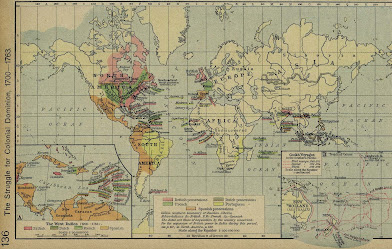
This article summarizes some of the main contributions of peoples worldwide before encountering European colonizers. It is not a complete review but touches on key contributions.
Africa
The original inhabitants of Africa had a history and culture before European colonization of their lands. The European colonizers considered these cultures to be primitive (and attempted to destroy existing cultures), not unlike how European settlers considered the culture of indigenous peoples in Canada to be primitive, with the goal of eliminating these cultures. Africa before colonialism included significant contributions. This includes stories of great wealth achieved through the extraction of gold (during the Malian empire between the 13th and 16th century) and, as a result, a strong force in international trade in gold and salt. Other kingdoms have also existed in Africa with complex administrative structures governing hundreds of thousands of people. Africa was also responsible for the creation of the University of Sankore, which could house a collection of 400,000 to 700,000 manuscripts. The Amazigh indigenous peoples, native to northern Africa, were specialists in crafts and metalwork as well as African musical instruments. This group established trade routes across the Mediterranean and Sahara, thus connecting with other civilizations.
Also, based on historical accounts, Africa was responsible for the first C-sections, which at the time were deemed dangerous in Europe. Africans safely performed them with an extremely high success rate, with both mother and child surviving.
In summary, according to one account, Africa “has seen ancient civilizations advance agriculture, science, technology, and political systems, all of it predating the European colonial era.”
Australia
Australia was home to indigenous peoples for tens of thousands of years before European colonization began in 1788.
These peoples belonged to complex societies and diverse cultures. They lived as hunter-gatherers and fishers with intricate social structures, legal systems, and spiritual beliefs tied to the land. They possessed a deep understanding of the seasons and plant and animal life, as well as sustainable practices for hunting, gathering, and managing their environment. Over 200 languages were spoken, with many indigenous people being able to speak more than 1 language. The indigenous peoples had cultures with artistic expression, including rock art, music, dance, and storytelling, which were used to transmit knowledge, history, and cultural beliefs. The spirituality of the indigenous peoples was based on the concept of Dreamtime, where ancestors were said to shape the world, creating the landscape, plants, animals, and laws governing human behavior. The Dreamtime stories were for understanding the world and providing guidance on living in harmony with nature and each other.
Middle East
According to TimeMaps.com, the Middle East can be considered a critical region for the history of humanity for several reasons. A quote from their summary covering the Middle East states the following:
It was here that farming first arose, the earliest cities appeared, writing first developed (and later the alphabet), the wheel, the sail, bronze metallurgy, iron metallurgy, the first empires, the first law codes – all were first seen here.
India
India has contributed much to the world before European colonization. Examples include:
Mathematics – the concept of zero and the decimal system was found and trigonometric tables were created
Astronomy – discovery of the length of the solar year, creation of calendars, tracking of celestial events, and mathematical models to understand the cosmos
Medicine – a holistic healing approach via Ayurvedic medicine was discovered and surgery expertise including cataract surgery was attained
Urban Planning – the Indus Valley civilization developed cities with streets, drainage systems, and water supply
Trade and Commerce – Indian traders created trade networks throughout Asia
Textiles – the Indus Valley civilization had started growing cotton way before anyone else
Religion – Yoga was discovered about 5000 years ago with practices and philosophy to lead an ethical life
Games – Chess was said to be created in India
Languages – Sanskrit and Tamil from India are amongst the oldest languages in the world – Sanskrit is a highly structured language with a precise grammar system
Economy – From 1 CE all the way up to 1700 CE, all the large scale industries like mining, metallurgy, textiles, arts, and crafts flourished in India. They boosted trade to such an extent that India held about 1/4th of the world’s GDP (Gross Domestic Product)
China
Some key contributions from China from before the 19th century are listed below:
– Paper Making – from 105CE – although paper existed in China before this date – the process became more doable with an improved paper-making process created around this time in China
– Gun Powder – around 1000CE – gun power was discovered through an experiment by mixing elemental sulfur, charcoal, and saltpeter
– Compass – around 1100CE – “By 1000 AD, navigational compasses were commonly used on Chinese ships, enabling them to navigate. Arab traders sailing to China might learned of the tech and brought it to the West.”
– Mechanical Clock – 725CE – dripping water resulted in moving a mechanical wheel, which made 1 complete rotation in 24 hours
– Silk – about 6000 years ago – over time “Chinese people mastered sophisticated silk weaving tech and closely guarded secret, and the West had to pay gold of the same weight for the silks.”
– Row Crop Farming – 6 Century BCE – “They planted individual seeds in rows, thus reducing seed loss and making crops grow faster and stronger. This technology was not used in the western world until 2200 years later.”
Conclusion
The presumption made by the European colonizers in many cases that others around the world were primitive compared to themselves does not show itself true after a review of some of the key contributions of peoples worldwide as noted in the examples above.
